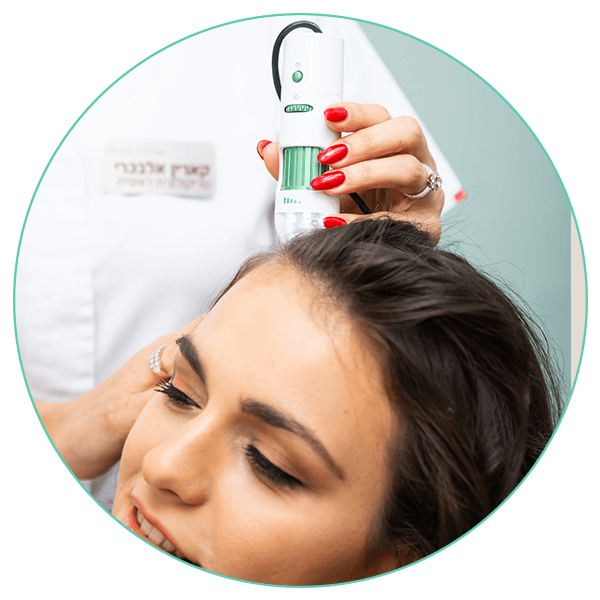
There is no single problem that causes hair loss, but rather multiple issues. The causes of hair loss can be varied and different, so that each person with a hair loss problem may experience the same symptoms but for completely different reasons. Therefore, the field of trichology was created, or in English it can be called ‘the science of hair’ or ‘hair science’.
So what exactly is trichology? Trichology is the science of hair. In other words, the field deals with everything related to hair and scalp problems. It is the study of the problems affecting human hair and the scalp, assessment of the causes of these problems, and the various treatment options for these issues. Are you experiencing hair loss? If so, a trichologist will be your best chance to discover exactly why this is happening.
Overall, trichology provides us with a clear understanding of hair problems and the measures we can take to prevent them. However, this science is not limited only to those suffering from hair problems. In fact, it can even benefit people with a healthy scalp by helping to ensure that the scalp remains healthy and that hair growth continues as they age.
Trichology began with the first institute of trichology that opened in England in 1902. Following this, the IAT organization was founded in the United States in 1974. The International Association of Trichologists—as a non-profit organization operating within a research framework at the University of California. The organization’s main goal is to advance research, study, and treatment of hair and scalp in routine and disease states.
The organization provides professional studies, training, and practical instruction in the field, under the leadership of David Salinger, founder and director of the organization, in order to train trichologists in many countries around the world.
These studies are currently held in the USA, Canada, Australia, New Zealand, South Africa, Singapore, India, and more. The many trained trichologists staff clinics for treating hair and scalp problems around the world.
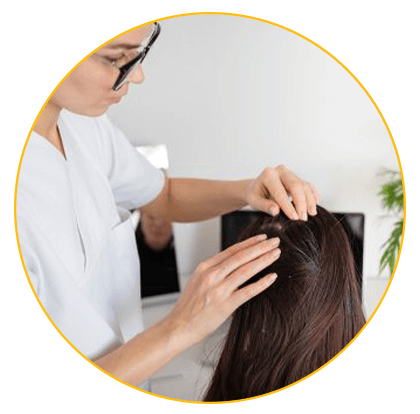
“Hair Clinic” is a senior and active member of the global trichology organization, the International Association of Trichologists (IAT). It maintains ongoing contact with it, shares information with its members around the world, participates in global conferences, and conducts study days and training for many trichologists in Israel and worldwide.
In 2010, Karin Albachri joined, a certified expert hair trichologist, who leads the organization in the professional field and manages the trichology division at Hair Clinic.
Today, Karin also serves as a board member of the IAT organization and holds international certification in the field. Hair Clinic leads the advanced hair treatment field in Israel and has thousands of success stories and satisfied clients who have restored their healthy hair appearance.
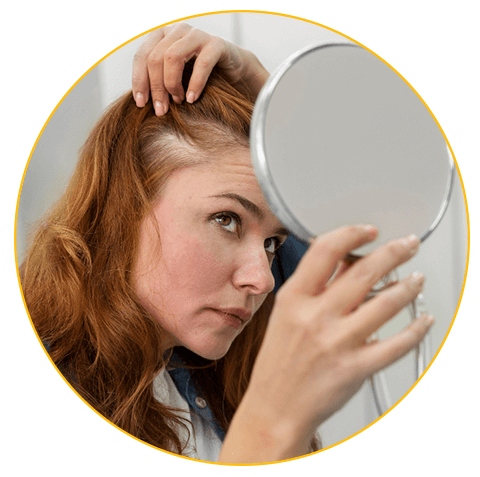
A trichologist is a hair and scalp specialist who has studied life sciences and investigates hair and scalp problems holistically. Clients are assessed based on personal history, lifestyle, genetic factors, and environmental conditions. After determining these factors, a trichologist will advise on personalized treatments, proper nutrition, and lifestyle changes in order to improve the health and appearance of the hair and scalp.
Beyond advising how to best deal with various conditions, the key trait of a good trichologist is their ability to identify with and understand their patients. For example, it is known that hair loss has a psychological impact, and women with hair loss often develop a negative body image. Hair loss causes them to feel insecure about their appearance. The role of a trichologist is not only to treat the problem but also to help clients increase their confidence and feel good about themselves.
One of the most common problems trichologists deal with is hair loss. Hair loss can relate to hormonal imbalance, autoimmune issues, nutritional deficiencies, genetics, and physiological or psychological stress. This is why it is essential that a trichologist looks beyond the hair and scalp—nutrition, lifestyle, genetics, and medical history all come into play and can directly or indirectly affect the diagnosis.
The internet is full of recommendations for various treatments and ‘miracle cures’ for hair loss, from dietary supplements and special hair shampoos to PRP treatment and laser therapy—the list is endless. So how do you know what will work? The truth is that treating hair loss is not as simple as people think. “Blind” treatment of hair loss usually will not do much for you except waste your time and a considerable amount of your money, unless you know how the problem was created and why.
Hair loss usually happens for a reason, and it is often related to an underlying health issue. In order to treat hair loss effectively, you need to know what type of hair loss you are dealing with and what the potential causes may be. For example, if your hair loss is caused by a thyroid problem, taking a biotin supplement will not help. The underlying cause must be treated.
The good news is that most types of hair loss are solvable or at least can be effectively managed. With the right approach and advice from a skilled professional.
We are connected to our hair on an emotional and psychological level. When we feel good about our hair, it can completely change our mood. We feel happier, more confident, and feel that we can conquer the world and face any challenge it brings in a much more positive way. Therefore, when we are not satisfied with our hair (whether it is hair loss, a bad haircut, or just a ‘bad hair day’), it can be incredibly stressful and has a significant impact on how we feel and the choices we make in our daily lives. So hair is definitely important and should be taken seriously.
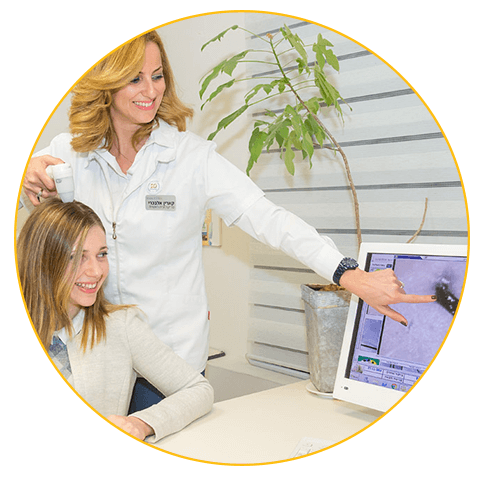
Many people who visit the clinic have already tried to treat their hair loss, but with very little success. They visit their family doctor (and that is the right thing to do), and usually some blood tests will be performed. The results of these blood tests often come back as normal, or may highlight a problem that is then corrected, but hair loss continues—sound familiar?
While many turn to self-treatment when dealing with hair and scalp problems, this may not always lead to the best outcome. With hair loss, for example, there are many complex factors that can be part of the equation, and it can be a real challenge to identify the root of the problem.
The truth is that there is no one-size-fits-all approach to hair treatment. This is why the expert advice of a trichologist is invaluable. Trichologists specialize in identifying hair problems and determining targeted and personalized solutions for each individual. Therefore, it is important to consult with a trichologist to diagnose your condition so that you can find an effective and long-term solution.
When suffering from hair loss, it can be difficult to know exactly where to turn. There are many different specializations in the field of hair and hair loss, and it is important to check what you feel is most relevant to your specific problem. Most often, dermatologists and trichologists are visited when a patient has a hair or scalp problem. However, when you are looking for one of these two professionals, you may want to know the proper differences between the two fields.
Trichology is a para-medical (i.e., non-medical) field of study on hair health and scalp conditions in the context of science. Trichology may include the study of diseases, assessment of causes, and the appropriate treatment method.
Dermatology is a branch of medicine dealing with the skin, nails, hair, and their diseases. It is a specialization in both medical and surgical aspects. A dermatologist is a specialist physician who treats diseases, in the broadest sense, and some cosmetic problems of the skin, hair, and nails.
A dermatologist is a medical professional who specializes in skin health. A trichologist focuses on skin conditions as well as hair, yet takes a holistic and non-medical approach to treatment and offering nutritional advice.
In a sense, trichologists can be seen as the first line of defense in dealing with hair and scalp problems. In many cases, trichologists and dermatologists complement each other in examining difficult hair and skin cases, and may work very well side by side.
Final Word,
In today’s modern world, there are many environmental factors that can affect the condition of our hair. Whether it is the widespread use of medications today, hormonal treatments, poor nutrition, stress, and lifestyle in general, there are many more people today dealing with hair loss or various hair problems.
Stopping hair loss is not a simple task. Often it is a complex challenge and requires a more drastic change than replacing your shampoo. Usually, the treatment will include several steps and treatments to achieve optimal results, and therefore it is important to consult with a professional who will know how to tailor treatment for you.