



Many people, both women and men, suffer from seborrhea – inflammatory sensitivity of the scalp. This inflammation is accompanied by dandruff (skin flakes that appear on the hair and fall onto clothing), redness, and itching. This inflammation is common and appears in many areas of the body where there is a concentration of sebaceous glands. Anatomically, each hair root contains a sebaceous gland that nourishes the hair and scalp surface, which is why seborrhea is noticeable on the scalp and directly affects hair growth.
Seborrhea is usually a chronic condition and most likely has a genetic basis, which flares up at different times for various reasons (sometimes weather, sometimes stress or anxiety).
The impact of seborrhea on hair can be devastating: beyond the fact that seborrhea is a visible condition causing significant discomfort to those who suffer from it, the inflammation caused by seborrhea can damage hair roots irreversibly. This means there will never be renewed growth where the roots have died.
Seborrheic inflammation creates a situation where the rate of sebum production in the hair follicle exceeds the rate of its removal from the skin. In this case, fat accumulation occurs within the hair follicles, seeping to the bottom of the follicle and blocking hair cells from producing and supporting hair growth. In effect, the excess sebum suffocates the hair creation process and kills the growth environment necessary for each hair, causing hair loss.
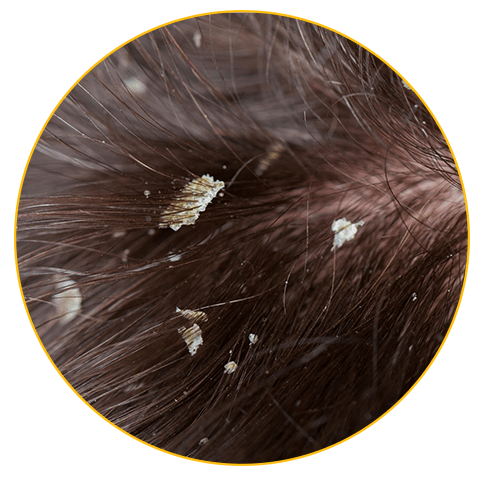
Seborrhea can be identified through several simple tests that can be performed at home.
First, run your hand over your scalp and try to examine whether you feel areas more sensitive to touch. Do you feel small bumps under the skin? Do you feel itching on the scalp? An unpleasant odor from the scalp? At the same time, try to look in the mirror and see if there are reddish areas on the scalp or if unexplained dandruff appears.
If you found that one or all of these symptoms are present, we definitely recommend that you be examined to determine whether it is seborrhea.
What Can Be Done?
A comprehensive diagnosis using a microscope can definitely determine whether it is seborrheic inflammation.
If it is found that the inflammation is indeed present, deep cleansing of the scalp from seborrhea is necessary. The purpose of the cleansing is to create a hygienic environment, reduce sebum secretion, and create a supportive growth environment for each hair.
At Hair Clinic, with a single microscopic diagnostic examination, you can see with your own eyes whether it is seborrhea or another condition. The microscopic diagnosis is non-invasive and provides an up-to-date, reliable, and accurate picture.
Once the situation is clarified, you can enjoy treatment that will resolve the seborrheic inflammation and provide you with a healthy scalp, a pleasant aesthetic feeling, and hair growth in a healthy and supportive environment.
The unique treatment method allows focus on the scalp, and with elements of dedicated products for the problem and scalp peeling, improvement can be felt even after the first treatment.