



For most of us, it is a symbol of our youth, and in certain cultures, it even represents fertility. For women around the world, it is also an expression of beauty, confidence, and personal style.
Unfortunately, for a growing number of women, the words “bad hair day” take on a much more serious meaning.
Hair loss not only robs a woman of her sense of style, but it often also disrupts her sense of self-esteem and confidence—and this can be devastating.
Whether your hair loss is a result of the aging process, hair damage, trauma, illness, or a genetic form of baldness, the good news is that there are a variety of medical and natural treatments that can help.
The obvious downside is that most treatments take significant time before results can be seen—often up to a year or more. So the treatment period becomes a waiting period. And the period when you cannot know if the treatment will work is the hardest period for women to cope with.
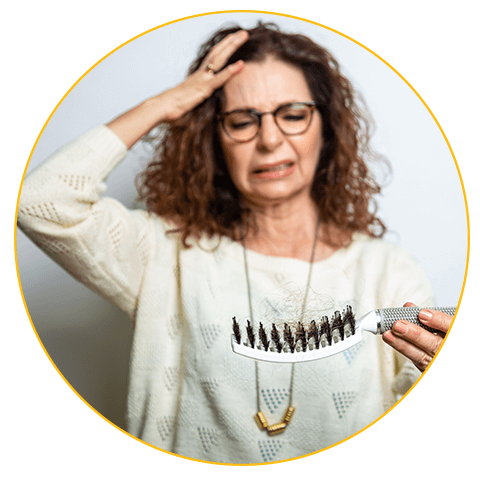
Anyone who has dealt with hair loss in the past or is currently dealing with it has surely experienced this. Suddenly, hair becomes the most important part of their appearance and even their personality. It is not just the first thing they notice in other women, it is the only thing—and this can ultimately cause great anxiety.
This can be especially true if a woman has relied on her appearance as her calling card, or even if her appearance constitutes a significant part of her identity.
If a woman is very connected to her physical appearance, if her sense of self-worth and self-identity are defined by her physical self, then hair loss will have a far more traumatic impact than it would on a woman whose identity is primarily defined by her intellect.
If you are someone whose appearance has played an important role in your identity, it is important to know that there is nothing wrong with that, and you must not compound your problems by feeling guilty that you care so much about your hair. If you are worried about your appearance, do not feel shallow about it or be ashamed of it. Give yourself permission to worry and feel bad about your hair loss, only then address the situation and do something about it.
Unlike other physical problems that can affect your appearance, such as being overweight, for example, losing your hair is something that can happen easily and quickly, and you must not feel so embarrassed by your problem that you do not take advantage of the options you have to address the issue.
If hair loss is bothering you, do not run away from it. Examine all your options—medical treatments, natural treatments, or a combination of both—and in the meantime, until they start working, explore temporary solutions such as wigs or hair extensions. There is no reason that just because you care about your appearance you should have to suffer.
Do not feel bad about feeling bad. If you truly find that you cannot cope with the change in your appearance, there is nothing wrong with wearing a wig—it is a good and very sensible solution, especially if you are waiting for treatment or in the middle of treatment to prevent hair loss.
Although most women suffering from hair loss are reluctant to try a wig or hair extensions at first, ultimately, many of them find it to be the best solution, especially if their appearance is key to their sense of well-being.
In many cases, a wig can restore a woman’s confidence and self-esteem. It is not the best solution, but at least she feels she can face the outside world without being judged harshly, and that can be important.
It is all about finding your personal comfort level and being true to yourself. While some women may benefit from allowing others to see them without hair—many find it to be a very liberating experience—for others, concealing their hair loss through wigs or hair extensions is the right answer. It really all comes down to being true to yourself and your feelings.
While experts report that most women do manage to accept their hair loss and reach a place where they are at peace with themselves, for some it can become a serious psychological barrier. In this case, concerns about appearance can turn into a pathological obsession that invades every area of a woman’s life.
If you are losing sleep because of your hair loss, if you keep praying for a solution, if it is affecting your appetite, or if you consistently feel sad, depressed, hopeless, or helpless, especially because of your appearance, then you are deeply affected by your hair loss and should consider speaking with a mental health professional.
Often, the problem is episodic depression, which can be easily treated. However, if the woman is not treated, not only can the condition continue to make her feel bad in many areas of life, the stress and worry may worsen the hair loss.
Now that we have covered how to cope with hair loss, it is important to understand that if you are experiencing hair loss, it does not mean you must find a way to make peace with it without a fight.
To treat hair loss, the most central and important thing is to discover the source of the problem. In today’s world, there are many reasons for hair loss, from genetic causes to hormonal issues or a problematic lifestyle. What is important is that most types of hair loss have treatment available today. If you want to receive customized and targeted treatment for your problem, it is advisable to seek the consultation and diagnosis of a professional, such as a trichologist who specializes in hair and scalp problems.
Trichology is a field that focuses on hair problems and helps diagnose their source and tailor treatment for the client in order to stop the hair loss and even succeed in growing new hair.