



The scalp and hair have a natural coating, a hydro-lipid layer composed of water, acids, and natural oils. The oil is essential for protecting the hair. It spreads gradually from the scalp down the hair shaft, acts as a lubricant, and gives the hair shine and flexibility. This essential oil is lacking in dry hair, and this phenomenon is particularly common in women. All hair is naturally dry. Hair only becomes oily when it is covered with an oily substance.
Contrary to popular belief, hard hair is healthy hair, just like nails. If you tend to use products that soften the hair, be aware that excessive softening may damage the hair more than benefit it. People with dry hair have a lower chance of hair loss compared to those with oily hair. Additionally, dry hair lacks moisture and is therefore less flexible and more brittle. Consequently, it is easier to treat dry hair than oily hair. The lack of shine characteristic of dry hair is mainly due to its roughness, and products that promise added shine are not always beneficial. Adding vitamins to styling products also does not contribute to the health of the hair shaft. If anything, dry hair needs moisture first and foremost.
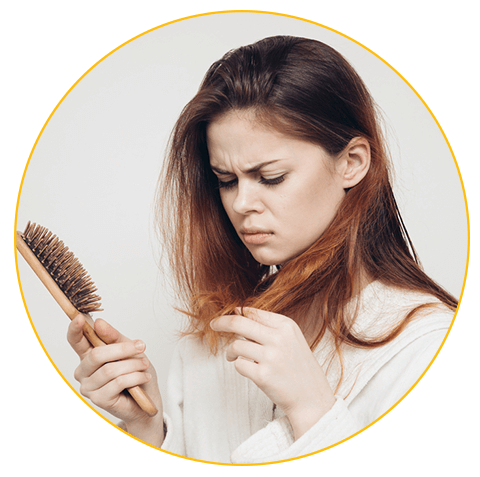
Sometimes hair becomes dry even though it is not naturally so. There are several reasons for this. Among the prominent causes are chemical cosmetic treatments, especially straightening and bleaching; wind, including the use of a hair dryer; sun exposure; chlorinated water; friction conditions, such as rubbing against clothing or aggressive towel drying; aggressive brushing; and the use of hair styling spray.
When any of these phenomena occur, the natural moisture that was trapped inside the hair shaft evaporates. As a result, the oily substance that was supposed to cover the entire hair shaft is immediately absorbed into the base of the hair shaft. Consequently, the hair becomes brittle, rough, and fragile.
Additionally, the longer and curlier the hair shaft, the harder it will be for the oily substance to reach and cover it. Therefore, the ends of the hair are always finer, drier, and more split compared to the base of the hair shaft.
Sometimes hair becomes dry, brittle, and dull as a result of a specific cause and suddenly. A skilled trichologist will be able to distinguish the difference and refer the patient to a doctor if necessary.
With aging, and especially during menopause and under the influence of hormonal changes, the activity of the sebaceous glands decreases. As a result, the protective layer on the hair diminishes, and the hair becomes dry. Additionally, cosmetic chemical treatments dry out the hair even more.
Read about the effects and causes of hair loss in women.
For those with dry, colored, curly, bleached, or chemically straightened hair, it is recommended to wash twice a week, but under the following conditions:
When the scalp is not too oily.
With a quality shampoo that does not completely remove the protective layer.
The hair is thoroughly rinsed at the end of washing.
Moisture is added to the hair at the end of each wash.
The hair follicle naturally secretes an oily substance. If the oil is too liquid or too solid, and when the hair is curly, very long, or damaged, its excessive secretion will make the scalp surface oily but leave the ends of the hair dry.
Now that we understand what dry hair is, what affects it, and how it can be prevented, it is time for the real question – how do you treat dry hair? First of all, it is important to choose a good shampoo. Sensibiliss shampoo from Prince Laboratories provides deep and gentle cleansing of the hair and scalp. The shampoo is suitable for colored, bleached, curly, or chemically straightened hair.
At the end of washing, it is recommended to use Baume Démêlant conditioner from Prince Laboratories, which restores the missing layer to the hair without causing excessive softening.