


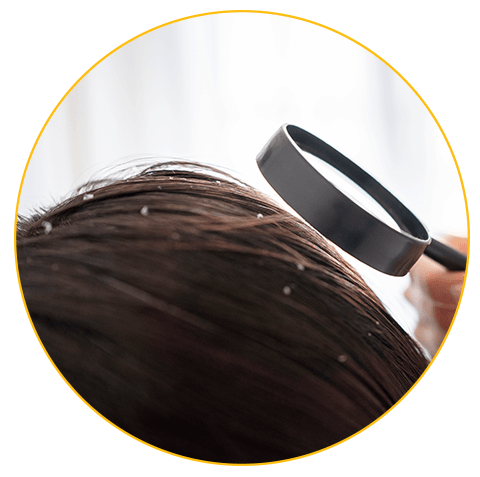
Dandruff in the hair is actually skin cells that shed from the scalp, just like skin cells that renew in all parts of our body. These are tiny cells that most of us usually don’t notice. The phenomenon familiar to many is the appearance of tiny white flakes in the hair or on the shoulders. The official name for this phenomenon is dandruff, and contrary to expectations, it is not a disease but rather an accelerated natural process. In other words, it appears when the scalp sheds its dead cells relatively quickly and in larger quantities than usual.
Most people deal with dandruff at one stage or another of their lives. However, the phenomenon is more common in late adolescence and among those with oily skin or oily hair. These individuals may suffer from the phenomenon especially during the winter months—dandruff is less prevalent in summer.
Additionally, in some cases dandruff is caused by a fungus that naturally exists on the scalp.
When the fungus begins to multiply and form colonies on the scalp, the normal balance is disrupted. In this state, the skin senses an attack and responds with increased cell production.
Dandruff is divided into three types with different characteristics:
In a state of oily dandruff, when the scalp and hair are not properly treated, hair health is at risk. Why? These flakes may block the hair follicle openings, suffocate the root, and consequently lead to hair loss. In such a case, the fungus living on the scalp that feeds on fatty acids will receive its nourishment in abundance and thrive greatly.
Neglecting oily dandruff can cause an additional effect on the scalp: in this state, acute inflammation may develop to the point of infection. The signs of this are oily, red, stinging, itchy scalp with numerous flakes in shades ranging from light brown to yellow.
There is a wide range of products on the market for treating fungus and the appearance of dandruff in hair. Most products contain anti-fungal ingredients. Natural preparations based on lemon and tea tree oil are available, known as an effective natural solution for the appearance of dandruff.
Before you proceed to try different products to treat the problem, it is recommended to diagnose the type of dandruff more thoroughly through a comprehensive examination using a microscope that can identify the type of dandruff and accordingly build a personalized treatment plan—whether it involves providing moisture and nourishment or cleansing the scalp. The goal is to achieve a state of balance—a healthy scalp and hair growth in a healthy and supportive environment.